Seasonal crop planning in farming games
Many farming games divide the year into seasons, each with its own crops. A little planning helps you avoid empty fields and wasted seeds when the calendar turns.
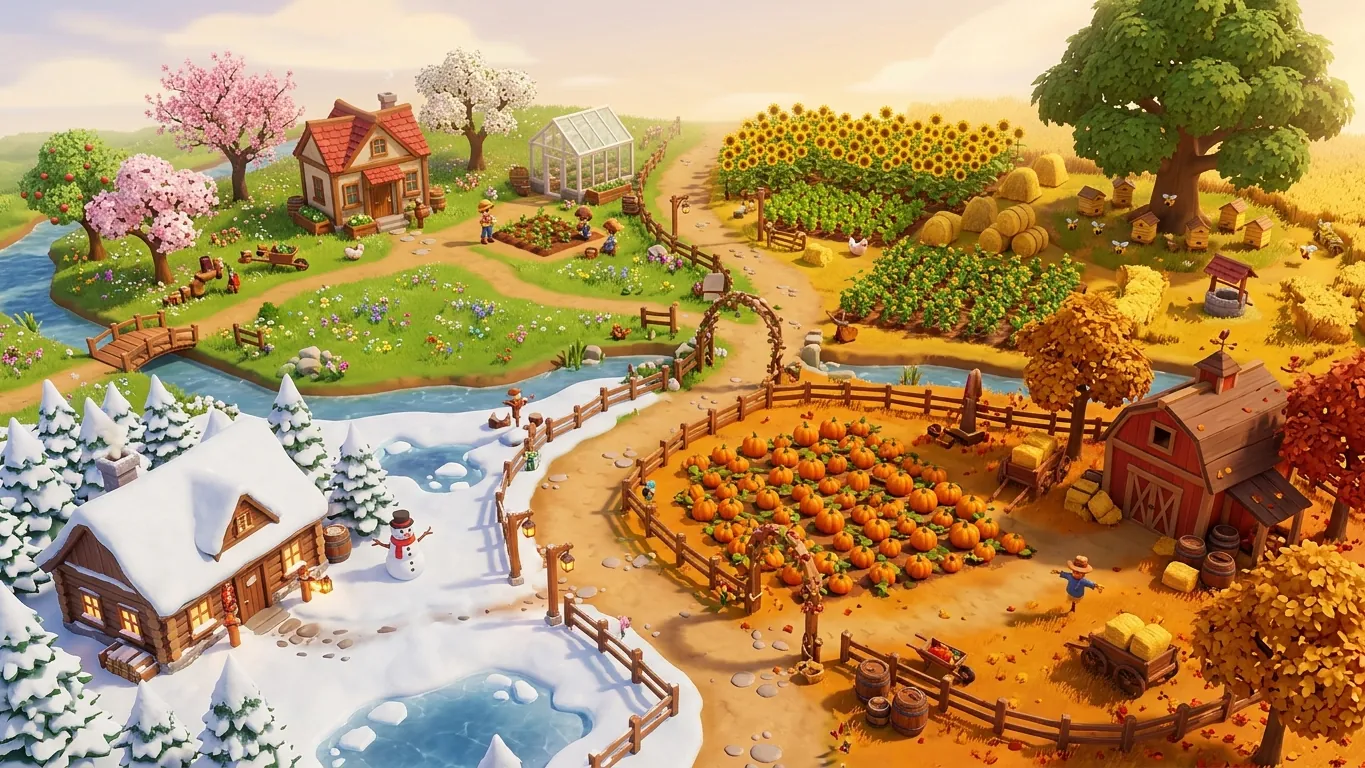
Why seasons matter
In many farming sims, crops can only be planted and grown in specific seasons. When a season ends, crops that do not belong to the next one may wither. That means the calendar is one of your most important planning tools.
Before buying seeds, check two numbers: how many days the crop takes to mature, and how many days are left in the current season. If a crop needs ten days and the season has eight days remaining, planting it may simply waste seeds. Some games show this information directly, while others expect you to keep track yourself.
Mix quick crops and long crops
A useful approach is to combine crops with different growth times. Quick crops give regular harvests and steady income, while slower crops often have a higher value per harvest or can be harvested repeatedly once mature.
Plant longer-growing crops early in the season so they have time to pay off, and use the gaps between them for faster crops. Toward the end of a season, switch to crops that will mature before the calendar changes. This keeps your field busy without leaving you with half-grown plants on the last day.
Design a layout that is easy to water
Field layout matters as much as crop choice. If you water by hand, arrange crops so you can reach them in a smooth path without backtracking. Leaving narrow walkways between blocks of crops helps your character move efficiently.
If your game offers sprinklers or irrigation, plan your rows around the coverage pattern of those items. It is often worth leaving space for them even before you can craft or buy them, so you do not have to rearrange the whole field later.
Prepare for the season change
A few in-game days before a season ends, look ahead. Which seeds will you need next? Do you have enough money set aside to buy them on the first day? Is there any soil you need to clear or prepare?
Some players like to harvest everything, tidy the field and plant the new season's crops right away on day one. Others prefer to stagger planting over several days so their harvests do not all arrive at once. Both approaches work. The best one is the one that fits how much time you want to spend each day.
Keep a simple planning note
You do not need a complicated spreadsheet to plan well. A short note listing each crop, its growth time and its season is enough for most players. Add which crops you need for quests or recipes, and you will rarely be caught off guard.
Remember that every game has its own rules. Some have greenhouses that ignore seasons, special fertilizers or unique crops tied to events. Use these general ideas as a starting point, then adapt your plan to the systems your game provides.
Related articles
 Animal care tips for farming games
Practical tips for looking after virtual farm animals: when to start, building shelters, feeding routines, collecting products and staying organized.
Read more
 Home repair sim basics: what to expect
An introduction to handyman and home renovation games: common tasks like cleaning, repairs, painting and furnishing, and tips for your first job.
Read more
 A room-by-room workflow for renovation games
Organize renovation game projects with a clear room-by-room workflow: assess, clean, demolish, repair, finish and furnish with less backtracking.
Read more